Commercial security in 2026 continues to evolve at pace, with UK businesses facing a more complex blend of physical crime, digital intrusion, and fire related risk than in previous years. Intelligence from the Office for National Statistics alongside policing and cyber security reporting shows that offending patterns are becoming more targeted, more opportunistic, and increasingly enabled by technology.
At the same time, the National Cyber Security Centre continues to highlight the growing overlap between cyber attacks and physical security breaches, where digital compromise is used to facilitate entry, theft, or disruption of operations.
For businesses, this means security can no longer be treated as a standalone system. Fire protection, access control, surveillance, and cyber resilience now operate as one connected risk environment.
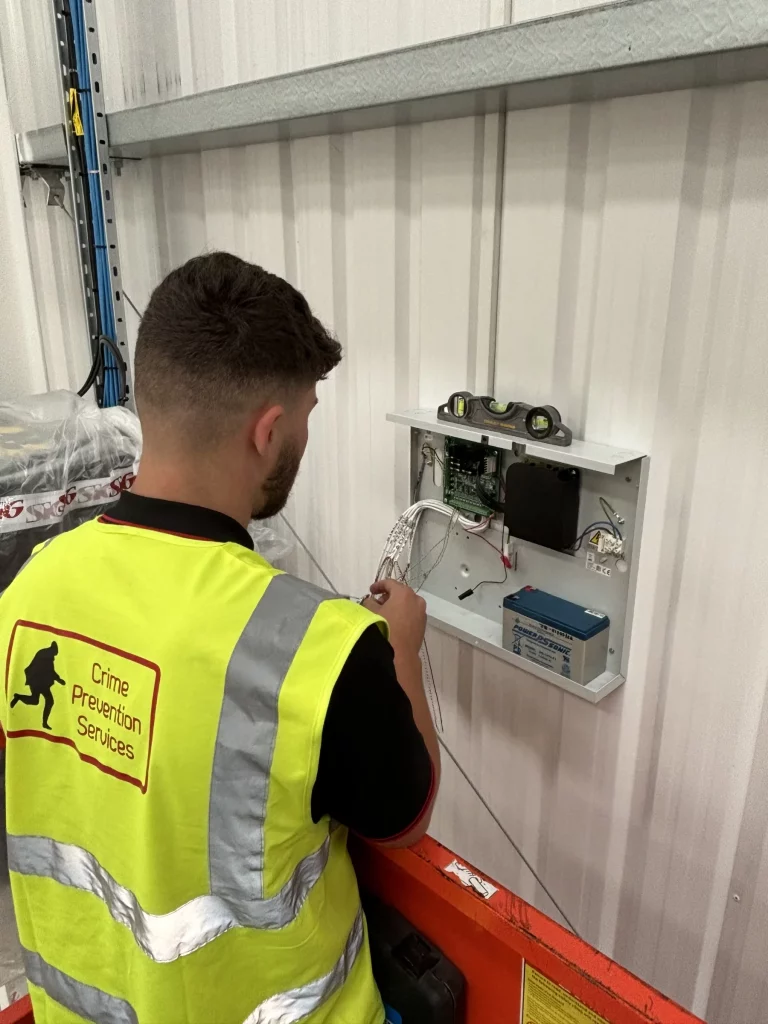
Emerging crime trends affecting UK businesses in 2026
One of the most significant developments is the continued rise in organised and opportunistic retail crime. Shops, hospitality venues, and warehouses remain key targets, with offenders increasingly using distraction tactics, coordinated groups, and rapid entry methods to overwhelm traditional deterrents.
Economic pressure has also contributed to sustained levels of theft and vandalism across commercial premises. These incidents are no longer confined to high value goods, with everyday stock loss and property damage becoming a consistent operational burden for many organisations.
Another growing concern is the targeting of unmanned or partially staffed premises. Hybrid working patterns have left many offices and commercial buildings unoccupied for longer periods, creating predictable windows of opportunity. Offenders are increasingly aware of these patterns and use them to their advantage.
Fire related risk also remains a serious consideration. Deliberate ignition and electrical fire incidents continue to affect commercial properties, particularly where older detection systems are in place or where maintenance schedules are not consistently followed.
Alongside physical threats, cyber enabled crime continues to expand. Weak network segmentation, outdated CCTV infrastructure, and poorly secured remote access systems can all be exploited to gain entry or disrupt building operations.
Key security and fire priorities for 2026
Upgraded CCTV and intelligent monitoring
Modern CCTV systems are now expected to do far more than record footage. AI assisted analytics, motion classification, and real time alerts are becoming standard expectations for effective deterrence and response.
Remote access remains essential, allowing business owners and security teams to verify incidents instantly. However, system security is equally important, as poorly protected cameras and network devices can themselves become entry points for cyber intrusion.
Integrated systems that combine CCTV with intruder detection and access control provide a stronger and more coordinated response to incidents.
Strengthened access control systems
Access control continues to be a critical area of focus for commercial premises. Traditional key based systems are increasingly being replaced with smart credentials, biometric verification, and encrypted access platforms.
The main objective is to reduce unauthorised entry while improving audit capability. Knowing who accessed specific areas and when is now a fundamental requirement for both security and compliance.
Fire detection and life safety systems
Fire safety remains a core pillar of commercial risk management. Early detection systems, particularly those compliant with UK standards such as BS5839, continue to be essential for protecting both life and property.
More businesses are now moving towards addressable and networked fire alarm systems that provide faster identification of incident location and improved response coordination.
Regular testing, maintenance, and system upgrades remain critical, particularly in older buildings or multi occupancy sites.
Alarm monitoring and rapid response
24 hour monitored systems provide a significant advantage in reducing response time during both intrusion and fire events. Alarm receiving centres can verify alerts, reduce false call outs, and escalate incidents to emergency services when required.
This layer of monitoring is increasingly viewed as standard for higher risk or high value commercial environments.
Integrated fire and security platforms
A key trend in 2026 is the consolidation of systems into unified platforms. Businesses are increasingly seeking solutions where CCTV, access control, intruder alarms, and fire detection operate within a single interface.
This improves visibility, reduces response delays, and supports more efficient management of multiple sites or larger facilities.
Security auditing and risk assessment
Regular security audits are becoming more important as threats evolve. Many organisations are now reviewing not only physical vulnerabilities but also digital exposure points within their building infrastructure.
This includes reviewing device firmware, network segmentation, entry point visibility, and staff security procedures. The goal is to identify weaknesses before they can be exploited.
Why this matters for UK businesses
The overall direction of travel is clear. Crime is becoming more adaptive, more technology aware, and more reliant on identifying operational weaknesses rather than brute force entry.
Businesses that continue to rely on legacy systems or fragmented security setups are increasingly exposed to avoidable risk.
At Crime Prevention Services, the focus remains on delivering integrated fire and security solutions that reflect this evolving landscape, combining detection, deterrence, monitoring, and rapid response into a single coordinated approach.
Taking a proactive stance in 2026 is no longer optional for most organisations. It is a practical requirement for protecting assets, staff, and business continuity in an environment where threats continue to diversify.