If you’ve installed EV charging points at your premises, your fire strategy may need another look. Lithium-ion battery fires can behave differently to conventional vehicle fires, which means early detection and the right response measures matter.
The key question is simple: would your current system spot a developing problem early enough?
Electric vehicles aren’t necessarily more likely to catch fire than petrol or diesel vehicles. The issue is that when a battery does fail, the fire can develop quickly, be difficult to control and require a different response.
That means businesses adding EV charging need to think beyond the installation itself and consider detection, monitoring and emergency response too.
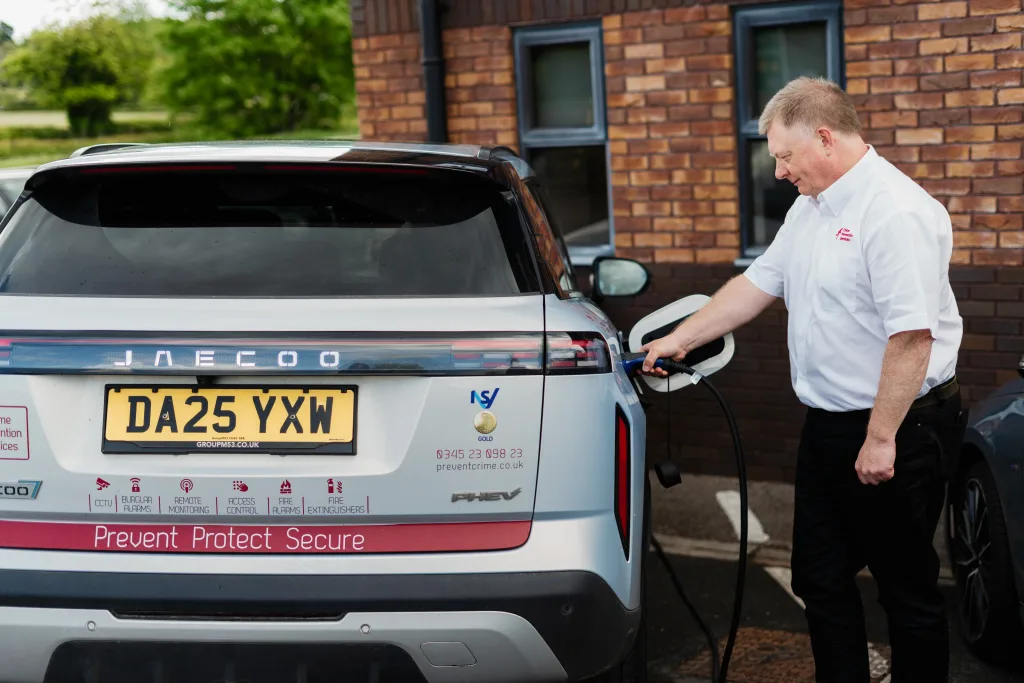
Why EV battery fires need a different approach
One of the main risks associated with lithium-ion batteries is thermal runaway. This happens when a battery cell begins to overheat, triggering a chain reaction that can spread through neighbouring cells. Temperatures can rise rapidly, releasing heat and flammable gases before a fire develops.
Once established, battery fires can also be difficult to control and may reignite after appearing to have been extinguished. For businesses, that makes early warning especially important.
Could thermal cameras give you an earlier warning?
Traditional smoke detection remains an important part of fire protection, but an overheating battery can begin developing significant heat before enough smoke reaches a detector.
Thermal imaging cameras can provide another layer of protection by monitoring temperature changes around EV charging bays. Rather than waiting for visible smoke or flames, they can identify unusual heat developing around a vehicle or charging area, giving teams an opportunity to respond sooner.
Their effectiveness depends on good system design, though. Camera position, sightlines and the location of charging bays all need to be considered rather than simply adding thermal cameras to an existing CCTV setup.
An alert is only useful if somebody sees it
Early detection needs to lead to a quick response. For sites that are empty or lightly staffed overnight, relying on somebody noticing an alert locally may not be enough.
Connecting fire and security systems to monitoring can help make sure an activation reaches someone who can take action. At CPS, systems can be monitored through our in-house Alarm Receiving Centre, providing 24/7 oversight when nobody is on site.
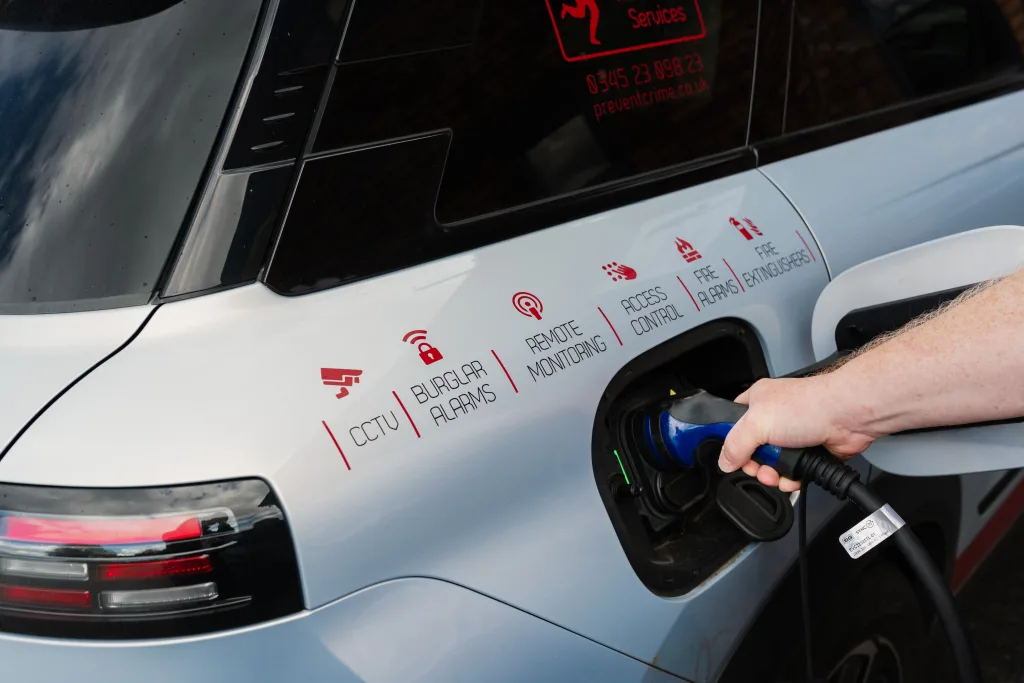
Look at the whole charging area
EV fire safety shouldn’t stop at the charger. Businesses should consider how charging points sit within the wider fire strategy for the site, including:
- where chargers are positioned
- how quickly abnormal heat or fire would be detected
- how an alarm would be raised and monitored
- access for the emergency services
- the potential for fire to spread to nearby vehicles or buildings
- whether appropriate extinguishing or suppression equipment is available
- what staff should do if an incident occurs
Enclosed and underground car parks deserve particular attention because smoke, heat and gases can accumulate differently from an open-air setting.
Adding chargers? Review your fire protection too
EV charging can be introduced safely, but adding chargers changes the risk profile of part of your premises. It’s a good opportunity to review whether your existing detection, monitoring and fire-safety arrangements are still appropriate.
That might mean introducing thermal imaging, improving monitoring, reviewing the location of detection equipment or making sure the right fire-safety equipment and response procedures are in place.
Planning EV charging at your premises? Talk to us about making sure your fire detection and monitoring keeps pace with the change.